
Systemisch @ 30 (or 32)
One of the most beautiful CDs of the 1990s


BIG NEWS! After literal months of back-and-forth with the IRS (they had so many questions about exactly what it is we do here), Burning Ambulance is officially a 501(c)(3) tax-exempt nonprofit! Donations to us are tax deductible under Internal Revenue Code (IRC) Section 170, and we are qualified to receive tax deductible bequests, devises, transfers, and gifts under sections 2055, 2106, or 2522. Click here to make a donation, and/or share that link with your rich friends.
Oval’s Systemisch is one of the most beautiful albums of the 1990s — hell, of the 20th century. Its approach to melody and rhythm, its astonishing subtlety combined with a kind of swooning romanticism, are unlike anything else, but it’s a genuinely pathbreaking work that inspired an entire school of electronic music that came along in its wake. And as with many great works of art, its creators — Markus Popp, Frank Metzger, and Sebastian Oschatz — moved on almost immediately. In fact, Metzger and Oschatz left Oval in 1995; it’s been Popp’s project ever since.
Systemisch was first released 32 years ago, on the German label Mille Plateaux. But according to Discogs, it was released in the US on June 18, 1996, on Thrill Jockey, and that summer was when I and a lot of other people heard it for the first time, and were stunned. For me, the effect has never truly worn off.
The first sound you hear is a soft ticking, not steady but syncopated, an almost swaying, almost swinging beat with a very quiet ambient tone humming beneath it. This lasts for about five seconds, before a loud bass sound booms and the music gets noticeably louder. A gentle, ambient synth tone begins looping behind the ticking beat, and two other sounds emerge: a soft, repetitive pattern, and an intermittent ping, almost like sonar. The big underwater bass boom recurs, too, but not often. Those are all the elements that make up “Textuell,” the album’s gorgeous manifesto of an opening track.
The gentle ticking noise I described was made by sampling the sound of a damaged, skipping CD. Oval’s music uses these tiny crunches — called “glitches” — as its primary rhythmic device. There are no drum machines on this album, no breakbeats or pounding techno rhythms, even though the last track is called “Gabba Nation,” named for an ultra-hardcore techno style popular in Germany and the Netherlands at the time.
The 11 tracks on Systemisch are all similar in style, but subtly different. Some have stronger melodies, while others feel like loops allowed to run for a few minutes, then stopped. The digital crunches and clicks are louder and more disruptive on certain pieces, and the melodies (all seemingly sampled and looped; I don’t think anyone plays a keyboard on this whole record) are sometimes quite intricately layered, shifting again and again, but at other times they flow smoothly, barely seeming to change at all.
A lot of avant-garde music, from Stockhausen and Cage to Autechre, seems to be about choosing a set of tools, establishing/writing a set of parameters, and then letting the process play out and seeing what results. This is why it’s often called “experimental music.” And later Oval releases, like the aptly named Ovalprocess, would go that route. But on Systemisch, Popp and his bandmates were far more deliberate. Like Kraftwerk, they were fascinated by technology — particularly consumer technology — but wanted to make something beautiful with it. The track titles are often straightforward, like “Compact Disc,” “Post-Post,” or “The Politics of Digital Audio,” but some are more poetic; “Schöner Wissen” translates to “know more beautifully.”
A couple of months before Systemisch was released in the US, Simon Reynolds wrote a feature for The Wire about the Mille Plateaux label, in which Popp and Oschatz were quoted. It’s interesting to see them attempt to squirm out of the traditional interview-with-a-musician boxes. Popp, for example, describes their work as “not so much about music as the technical implementation of notions of music… It’s an effort in sound-design rather than music with a capital M. The main content of our effort is to have an audible user-interface.”
In another attempt at deflection, Schatz claimed Systemisch “was done with a very cheap MIDI set-up and a borrowed copy of Aphex Twin’s Selected Ambient Works Vol. II.” This was a joke based on Richard D. James having complained that Oval was ripping off his ideas.
Popp was apparently less jokey about it, offering Reynolds a cagier, more defensive response: “That album is composed of material that is really old, and it got edited, layered and recombined so many times, it’s stupid to ask whose music is this?… That is the only truly negligible aspect in our music. Most of the CDs we used were rented, and often they didn’t have their covers.” He even tried to act like the use of CDs — the crucial compositional element of Systemisch — wasn’t crucial to their work, adding that “we did use CDs, but that’s neglectable, there are so many other things we could have used. The important point was that the CD player has no distinction if it’s an error or a proper part of the recording, it’s just doing calculations, algorithms.”
That latter statement is a perfect example of Pop Art philosophy. You can trace its core assertion back to Duchamp (a urinal can be art) or to Warhol (a Brillo box can be art). Yes, it’s true that the CD player just reads the data it’s presented with; it doesn’t understand the data it’s reading. (“Artificial intelligence” is an oxymoron.) But the broader point is that so-called “errors” can be beautiful, and can be repurposed to become “a proper part of the recording.” Think of Brian Eno’s “Oblique Strategies” card: “Honor thy error as a hidden intention.” Think of record scratching.
(Side note 1: Yes, Systemisch — which seems as much like music designed for CD as anything has ever been — has been available on vinyl since its initial release. There was even a cassette version.)
(Side note 2: Personally, I wish Duchamp’s reason for signing a urinal “R. Mutt” and placing it on display had not been to showcase “everyday objects raised to the dignity of a work of art by the artist’s act of choice,” but rather to simply say, Look how beautiful this quotidian object is! Look more closely at the world around you; you’ll be amazed what you’ll see. Oh, well.)
Systemisch broke through into mainstream culture to a surprising degree. “Textuell” was even used in a commercial for Giorgio Armani’s Acqua di Gio perfume:
And like record scratching, albeit on a smaller scale, digital glitching became a new compositional tool. A few years later, Mille Plateaux released the Clicks & Cuts compilation, a 2CD set of abstract electronic music, some so ambient it barely existed, some loud and aggressive, but all exploring the rhythmic and compositional potential of digitally fractured sounds. That was followed by the 3CD Clicks & Cuts 2 in 2001, and the 2CD Clicks & Cuts 3 in 2002.
(Another compilation, Electric Ladyland Clickhop Version 1.0, also released in 2001, attempted to bridge the gap between the softly ticking beats of glitch and the downtempo, bass-heavy hip-hop of Electric Ladyland, a six-volume series featuring tracks by Techno Animal, Alec Empire, Spectre and other purveyors of industrial strength noise terror. Maybe I’ll write about that series one day.)
Glitch never became a pop style; it was too weird to be fully absorbed. But it did migrate into slightly more mainstream environs here and there; Björk sampled the Systemisch track “Aero Deck” on her 2001 album Vespertine, and the subgenre “microhouse” adopted the clicks and crunches of glitch to four-on-the-floor dance music. Eventually, as the music migrated from hardware (the use of distressed CDs as sample sources) to software (creating one’s own clicks and skipping sounds in a laptop), existential questions began to arise. What should it be called when one creates from scratch — no pun intended — a sound that mimics an error, but is in fact not an error but an effect deliberately, even painstakingly, achieved?
As much as I enjoy the Clicks & Cuts compilations, and Vespertine, and various ultra-minimal electronic releases on labels like 12K, though, Systemisch stands alone. Its gentle beauty, perfectly reflected in its pastel gray cover art, makes it one of the most purely blissful albums I own. And despite the ultra-’90s methodology behind its creation, it really is a timeless work of art. If you’ve never heard it, I envy you your first encounter.
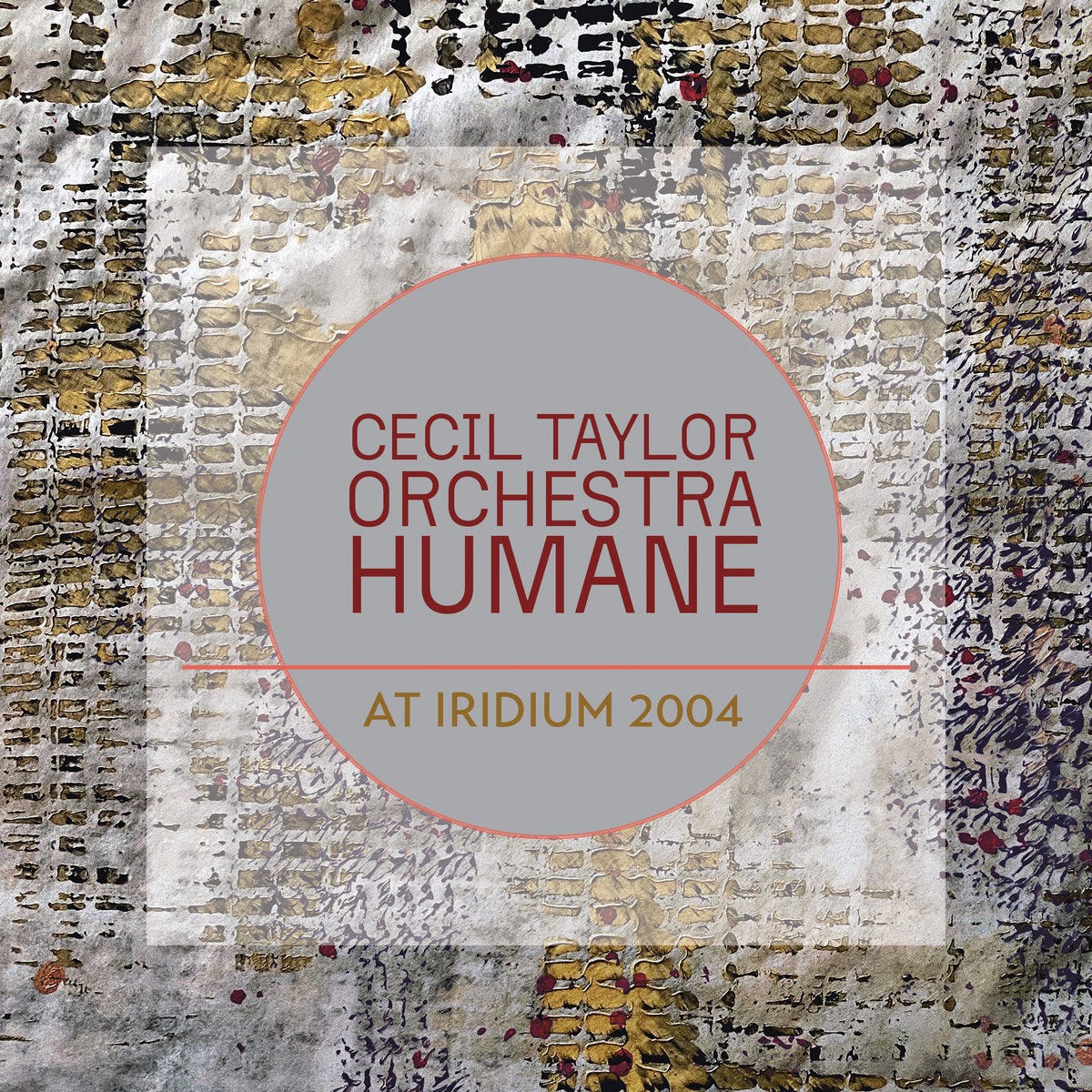
For several years in the early 2000s, Cecil Taylor led an orchestra of 12-15 members through an annual week of performances at the New York jazz club Iridium. They performed to packed houses, but none of that music has ever been released… until now. At Iridium 2004 is a digital-only set containing 14 complete performances by the Orchestra Humane — 16 hours of music in all. The music is extraordinary, and the recordings capture it in all its glory. It’s out July 3; pre-order your copy now.
Can’t believe “Textuelle” is that old but its sound is beautifully archaic in that millennial way. Also: may we all aspire to be “so ambient [we] barely exis[t].”